
Blog Archives


His Law can only be a path meant to help us live each day with joy. By following it, we discover true happiness. A homily delivered by Fr. Diego Puricelli in Milan.

During a family trip to Rome, my dad looked out at one of the major avenues nearby the Vatican and commented: the roads don’t have lanes. There were busses, vespas, fiats, and somehow no accidents. Immediately I pointed out to him, and the people that drive on these roads are the same ones that write our Canon Law.
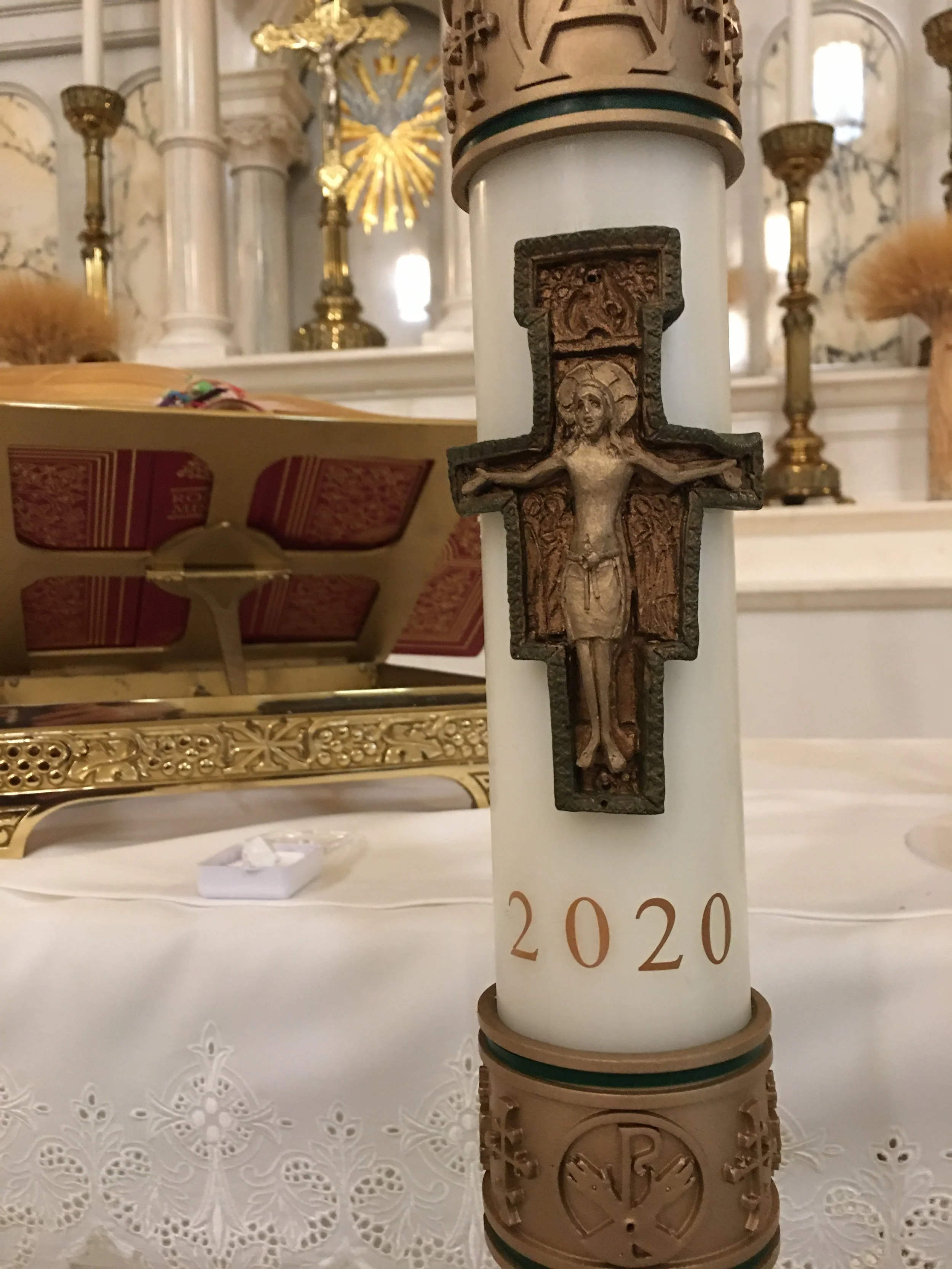
If you’ve ever looked at a legal document and felt it was missing the "truth" of the matter, you’ll understand the tension John the Baptist felt at the Jordan River. My latest blog post dives into the moment John claimed he "did not know" his own cousin, and why that confession is the key to our own sacramental lives.

(Not a post about power/roles in the Church) The play Hamilton famously challenged our ideas about “casting”…could it also be the key to unlocking the future of Catholic theology? Let’s look at the major innovations in Church teaching from Saint John Paul II in 1979 and how he got us unstuck from a big problem: a theology that had for centuries formally stated women are "a biological defect.”

Fr. Diego Puricelli reflects on why the Church puts St. Stephen’s feast so close to Christmas on the calendar. The martyrdom mirrors the life of Christ, taking shape within a religious context where guardians of the law and experts in scripture feel threatened by his word.
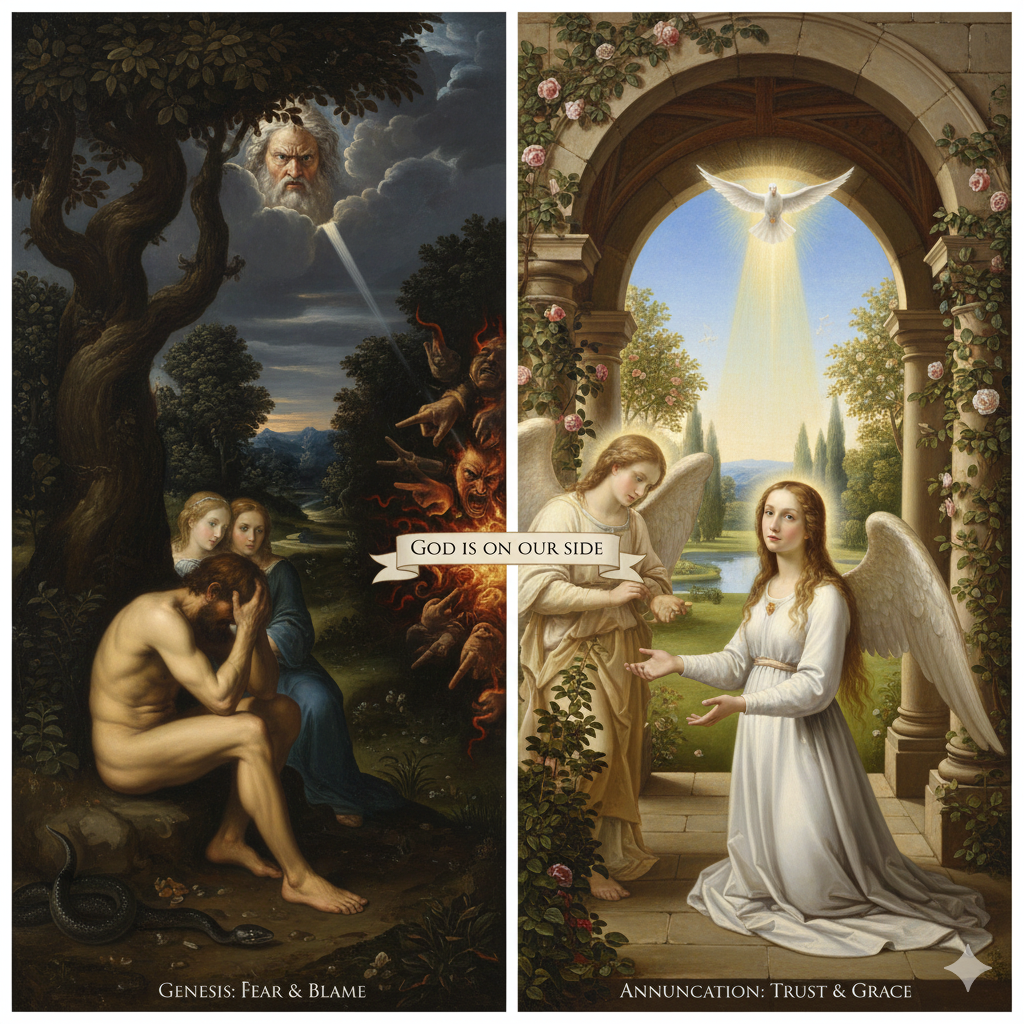
The author invites you to dive into today’s readings—the dialogue with Adam and Eve after the Fall (Genesis 3:9-15, 20) and the Annunciation to Mary (Luke 1:26-38)—to understand a crucial spiritual journey: how we move from perceiving God as an accuser to recognizing Him as the one who is fundamentally with us.
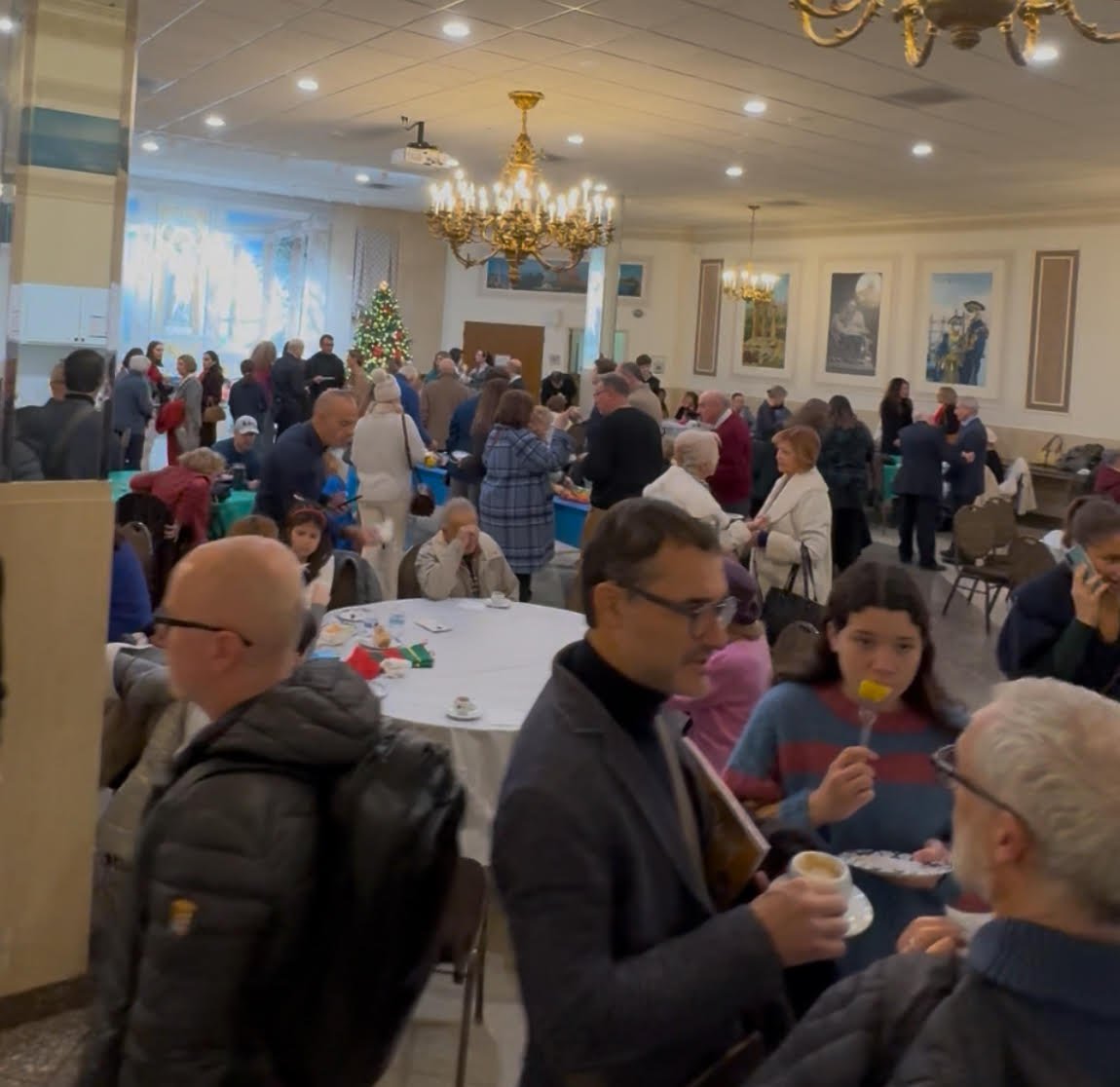
Follow the smell of coffee and grilled cheese to my parish basement. You’ll hear sounds of football on tv and the voices of the homeless and volunteers catching up. That’s your typical experience every Sunday afternoon for our little chapter of Sant’Egidio, a Catholic community dedicated to experiencing the Gospel through friendship with the poor and discarded.

This reflection is heavily influenced by Fr. James Keenan, SJ, and the first three of the D’Arcy Lectures on “Preparing for the Moral Life” delivered in 2022.
You can find the lecture series at https://www.youtube.com/watch?v=k0ZY-4uGa4E

For those of us who grew up attending Catholic school, our journey with the faith began by learning simple prayers and rules. For any second grader, it’s an accomplishment to know the commandments, the precepts of the Church, and to be able to recite prayers every night before going to bed. That is an important foundation.
But to start thinking like a theologian, you have to also learn to contemplate the mystery of God. To meditate on his vast creativity, and how he made each and every one of us in his image and likeness. If we’re thinking like a chef, we are like fresh produce carefully cultivated and picked in order to make a five star meal. God does not make mistakes.

Yes, the Latin Mass is beautiful. But can it be replicated in the modern day and still capture all of the essential Eucharistic theology it once had?


It’s incredible how such a core concept of Catholic theology can still be a serious subject of division. How can one know Jesus Christ without first knowing what mercy means? Maybe we think we do mean it. But do we make it too personal, too much about the self and a place of righteousness? Cardinal Walter Kasper noted in his 2014 book Mercy that this topic is almost criminally neglected in theological textbooks. It leaves our seminaries and our parishes with a void, one that is frequently filled by opposing and painful interpretations of what it means to GIVE mercy.

FREE Post available to non members
Now, the very experience of the first witnesses reminds us that the joy of the resurrection is not accessed in a straightforward, linear way. In fact, from the accounts of the appearances, we can glimpse a kind of common thread that links all these narratives: the rejection of spectacle. The Risen Lord, in fact, does not choose to manifest himself to everyone in a clamorous and convincing way. His presence is not imposed. On the contrary, he reveals himself with extreme discretion, almost with modesty, and only to a few. He lets himself be recognized through simple, almost negligible signs: the bandages left in the tomb, the heart that burns along the way, the net full of fish, the testimony of the women. In short, the presence of the Risen One is extremely discreet.

In my past life, working in foreign affairs and politics, I learned a simple but profound rule: people are rarely fighting about what they tell you they are fighting about. This is excellent advice for any aspiring diplomat but also for spiritual advisors.
We tend to tell other people what we want them to hear. And in defending ourselves against accusations of doing something unjust we especially cling to appealing reasons that conveniently help us cover up our own shortcomings.
The Church will have an ever-growing number of individuals who have broken Church law (like a couple using IVF to conceive) or who have made the difficult life decisions to get remarried after a divorce. And for those who have found positivity and stability in their choices, we are increasingly having difficulty explaining why the Church cannot walk the journey with them.

I’m writing this from the bayous of Cajun country in Louisiana. As a former French colony, there are still some small rural areas where upward of 20% speak Cajun at home. Having religion and being Catholic are the same thing here. They even call the county government a “parish” owing back to the time when the Church was the main organizer of society and culture.
On this trip, I learned about Charlene Richard (pronounced REE-chard), the tragic and heroic story of a cheerful 12 year old girl who died of Leukemia in 1959. When she learned of her fate, she didn’t just endure her suffering; she joyfully accepted it and offered it for the sake of others. They call her the “Little Cajun Saint” and Catholics here have a devotion to her. But the context of her story is often lost in a modern world where we can sometimes tell people to embrace their suffering as a way to make THEM more holy, not us.
For those of us who are LGBT or divorced and remarried Catholics, the phrase “take up your cross” has been both harmlessly cast upon us and occasionally weaponized by those that want to keep the parish pews pure. You can experience gay thoughts as long as you keep them secret and hidden. The modern approach to suffering for its own sake treats it like a virtue. Unfortunately, this simple reading is a profound departure from Catholic tradition. It treats the cross as a prison, not as a path to the fullness of life.

The desire to be a “good Catholic” is one that we all know. It’s a tug from deep within reflecting an increasingly isolated world that craves a deeper connection with faith and their fellow man. But what happens when this desire transforms into a subtle and complicated ambition—the desire to be seen as a great Catholic. Is it selfish? Or is it a misguided determination to thrive within a community that also happens to be Catholic.